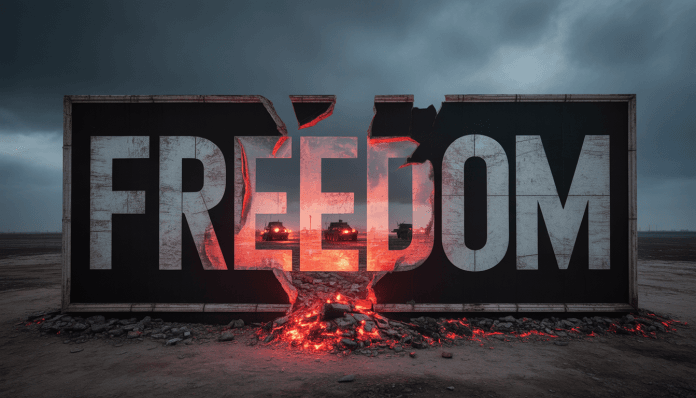
Terrorists Hate You For Your Freedoms …
Question; In the year 2001 Which fall guy (country leader) said ‘they hate you for your freedoms?’ He/they were referring to Muslims from the middle East. Including but not limited to Libya (bad man – not), Iraq (bad man (not), Syria (bad man). He/they said these countries were full of terrorists and that they all wanted to kill us so to keep us safe they said I’d bomb millions upon millions of innocent people causing death and destruction.
Fat forward 20 years these governments now welcome with open arms the Very people they said wanted to kill us for our freedoms. Hundreds, sometimes thousands of these’terrorists that they said wanted to kill us srtoll in bits or RNLI (this is what your donations now enable when donating to the RNLI SO STOP NOW) day in day out for many many years . Call me thick but in what way does this protect us? In what way is moving them in next door keep us safe. Just like the sexed up dossier it’s all less from the masters of death and destruction.
“They Hate You for Your Freedoms”: The Line That Sold a War
Cast your mind back to 2001.
A Western leader stood in front of the cameras and delivered a line that would echo for decades: “They hate you for your freedoms.”
“They,” of course, being entire nations across the Middle East — Iraq, Libya, Syria, Afghanistan — all painted as monolithic threats, all reduced to a single story: dangerous, irrational, freedom‑hating. The message was simple and terrifying:
These people want to kill you. We must act. Bombs will keep you safe.
And so began the invasions, the drone strikes, the “coalitions,” the “operations,” the “missions.” Behind every euphemism were real people, real cities, real families. Millions of lives shattered under the banner of “protecting freedom.”
Fast‑forward twenty years.
The same governments that once insisted these regions were overflowing with terrorists now process arrivals from those same regions with barely a whisper of the fear they once relied on. Boats arrive. People are screened. Policies shift. Narratives flip.
And the public is left with a question that no institution wants to answer:
If these countries were full of people who “hated us for our freedoms,” what changed?
Were they a threat then? Are they a threat now? Or was the threat narrative simply convenient at the time?
This isn’t about demonising individuals fleeing war or seeking safety. This is about government storytelling — the way fear is manufactured, deployed, and then quietly retired when it no longer serves a purpose.
Because the pattern is unmistakable:
- Fear justifies war.
- War creates chaos.
- Chaos displaces people.
- Displacement becomes a new political talking point.
- And the public is expected to forget the original script.
The same institutions that once insisted we were under existential threat now insist everything is fine. The same institutions that sold “sexed‑up dossiers” now pretend they never existed. The same institutions that promised safety through destruction now ask us not to question the consequences.
This is not about blaming people. This is about holding power accountable for the stories it tells — and the lives those stories destroy.
Governments don’t apologise for contradictions. They rely on the public having a short memory.
But The Daily Pontificator does not.
We remember the slogans. We remember the justifications. We remember the bombs. And we remember the silence that followed.
If institutions want trust, they can start by explaining the gap between the fear they once sold and the reality they now present.
Until then, we’ll keep asking the questions they hope we won’t.