In an era where “experts” and pontificators claim that our people have no distinct culture or deep-rooted history, the evidence to the contrary isn’t hidden in a restricted archive. It’s written on the maps, etched into our surnames, and flowing through the very rivers we cross every day.
For the Tunsteads of the North, the truth is 1,500 years old. And it’s a title deed that can’t be erased.
The Myth of the “Blank Slate”
We are often told that our towns are just random collections of post-industrial sprawl. But look at the name Tunstead. It isn’t just a label; it’s a functional description from the Nordic-Germanic tribes who built this country.
In the original Anglo-Saxon (Tun-stede), it literally means “The Permanent Farmstead.” While others were passing through, the “Stede” people were the anchors. They were the ones who cleared the bush, raised the timber, and stayed put. They were the original “Selfless Generation” who turned a wilderness into a nation.
The Kingdom of the Boundary
The history is even deeper in the water. We call it “Merseyside,” but the truth is in the root word: Mearc.
In the 7th century, the Mersey wasn’t just a river; it was the Boundary. It was the jagged line between the Great Northern Kingdoms.
To the North lay Northumbria.
To the South lay Mercia (The “Border People”).
When a family name like Tunstead migrates from the heart of Northumbria (Darlington) back to the Mercian frontier at the Runcorn Gap, it isn’t just a house move. It is a 1,000-year-old bloodline retracing the steps of the Anglian settlers. From the Warrior Queen Aethelfled defending the Runcorn Gap in 915 AD, to the modern day, the “Border People” have never left their post.
The Living Map
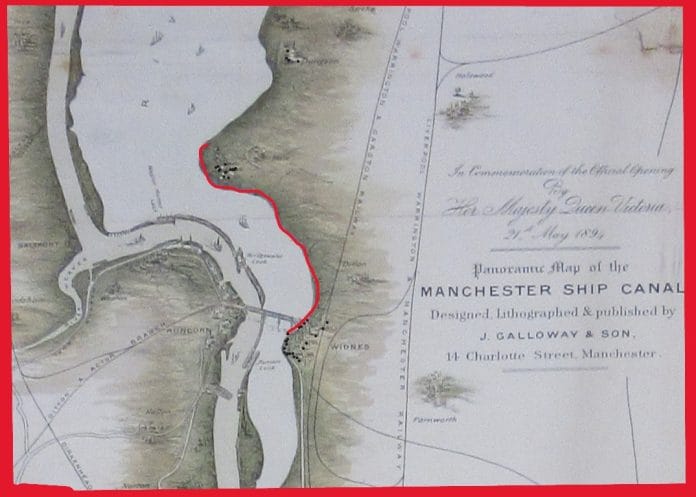
If you look at the 1894 maps of the Runcorn Gap, the landscape itself seems to scream its identity. You can see the “Face” in the river—a giant mouth at the Gap about to swallow Weston Point. Trailing behind it, the Ship Canal looks like a giant silver seed—a metaphor for the original settlers “seeding” the coastline with life and industry.
Why It Matters
Truth matters because without it, you have no foundation. If you convince a people they have no history, you convince them they have no right to the land.
But the Tunstead name proves otherwise. It is the “Anchor.” It is proof that we didn’t just arrive; we were the architects of the soil. We are the Mercians, the Northumbrians, and the Nordic-Germanic pioneers who stood fast at the “Mearc.”
The truth is under our feet. We just have to be brave enough to claim it.